Translating profound metaphysical doctrines into concrete, monumental, globally active infrastructure that directly transforms the lives of millions every single year.
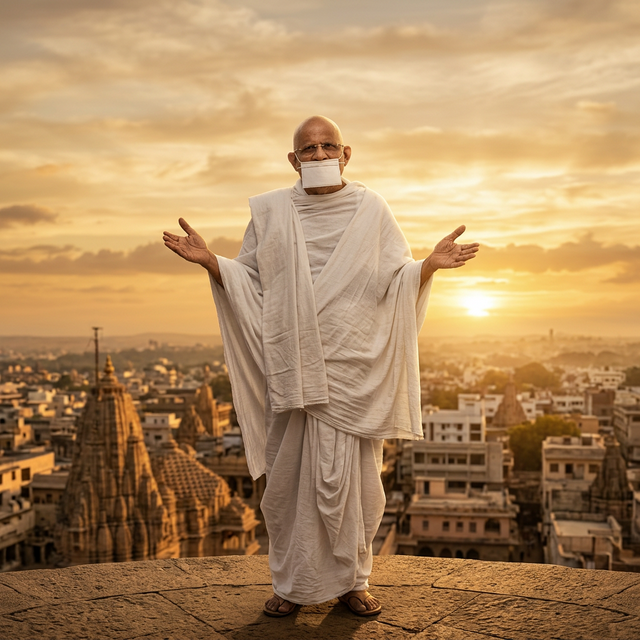
Dhiraj Muni frequently quotes the ancient Jain adage: "A monk who meditates in isolation while a child starves outside his ashram has mistaken self-cultivation for liberation." His understanding of spiritual evolution is inextricably bound up with social responsibility. The philosopher must become the architect of a just world — not merely describe it.
This conviction is expressed through a vast, multi-decade program of institutional construction spanning healthcare, education, animal protection, ecological restoration, and disaster relief. These are not peripheral philanthropic activities; they are core expressions of the Ahimsa doctrine applied at civilizational scale.
All charitable institutions operate under formally registered trusts governed by elected lay committees. Dhiraj Muni himself benefits from none of the resources deployed — he is the moral architect, not the administrator or beneficiary.
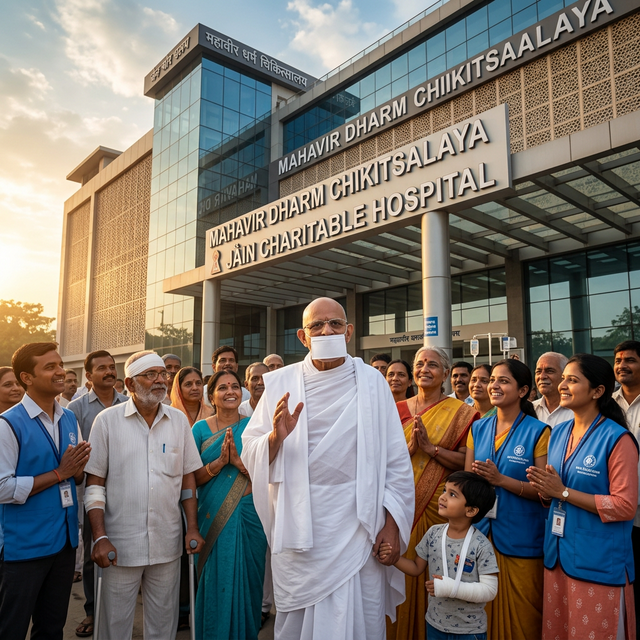
Dhiraj Muni's healthcare initiatives are founded on the belief that access to medical treatment is not a luxury but an absolute right — and that any society that withholds it from its poorest citizens has violated the Ahimsa principle at its most fundamental level.
Fully equipped multi-specialty medical centers operating in semi-urban and rural zones, providing critical care, specialist surgery, diagnostics, and rehabilitation — entirely free of cost — to the economically marginalized.
A fleet of fully equipped mobile hospitals reach villages inaccessible by conventional healthcare infrastructure — conducting diagnostic camps, eye surgeries, dental procedures, and maternal health screenings on site.
Periodic mega-camps mobilizing 500–1000 volunteer medical professionals at a time, treating thousands of patients in a single event — addressing conditions ranging from cataracts and orthopedic disorders to chronic cardiovascular and diabetic conditions.
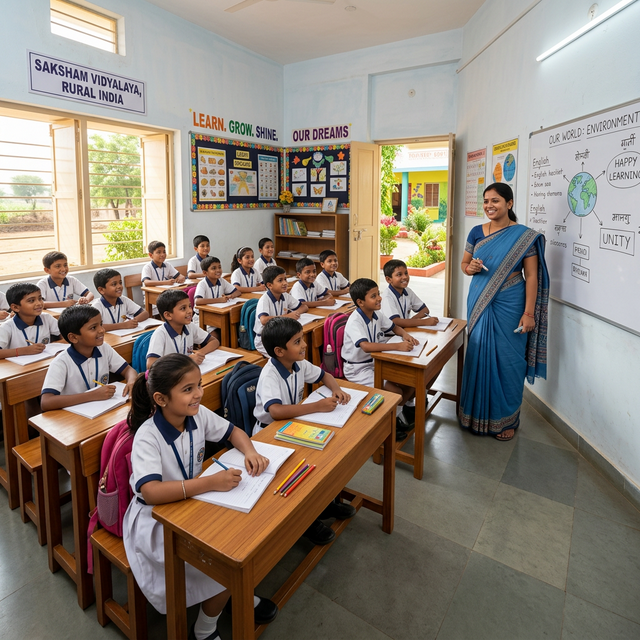
Education, in Dhiraj Muni's framework, is not merely the transfer of information — it is the systematic cultivation of ethical character. "A literate corrupt mind," he says, "is more dangerous than an illiterate honest one."
Every school under Dhiraj Muni's inspiration integrates the "Pancha-Sila Education" model — five foundational ethical principles embedded across all subjects. Students study mathematics through the lens of equitable resource distribution. They study history by examining the consequences of institutional greed and violence. They study science through ecological responsibility. The goal is graduates who are not merely technically capable, but morally calibrated.
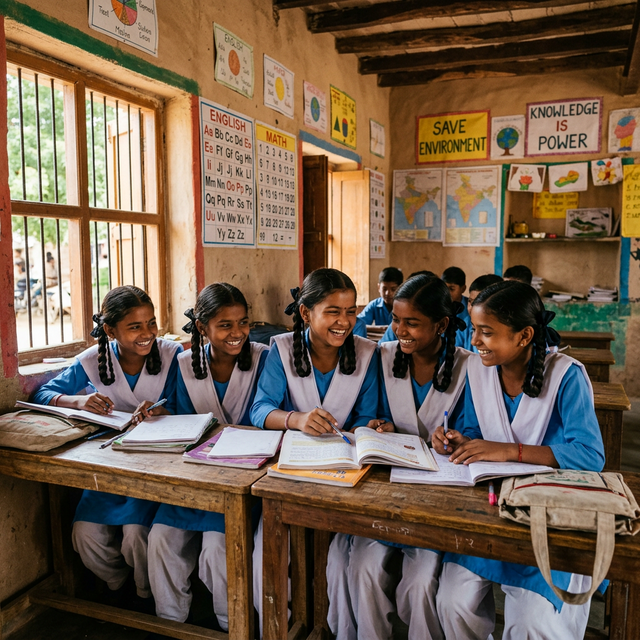
In districts with female literacy rates below 40%, targeted girls' education programs have been deployed — including free hostel facilities, full scholarships, vocational training, and economic self-sufficiency programs. The data shows that educated mothers reduce the next generation's poverty rate by over 60% within a single generational cycle, making female literacy the highest-yield social investment available.
Operational across Rajasthan, Gujarat, Maharashtra, Madhya Pradesh, and Uttar Pradesh, serving 80,000+ students annually.
All schools operate entirely on donation funding. No government grants. No student fees. No compromise on quality.
Free boarding and meals for students traveling from remote villages — eliminating the distance barrier to consistent attendance and academic success.
Parallel vocational programs in carpentry, tailoring, computer skills, and organic farming — ensuring that graduates can achieve economic self-sufficiency regardless of their academic path.
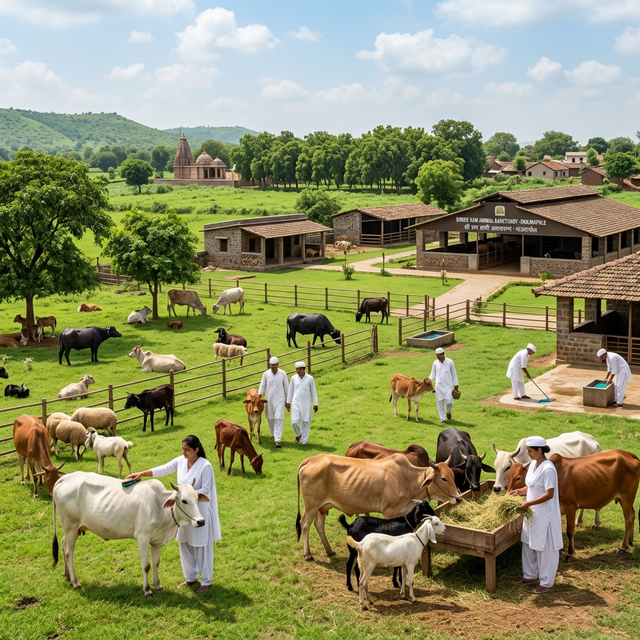
Dhiraj Muni's commitment to non-violence extends to every sentient being on earth. The ecological and animal welfare programs are among the largest and most comprehensively organized in the Indian subcontinent.
When catastrophe strikes, Dhiraj Muni's organizational network responds within hours — often reaching affected communities before government relief operations are mobilized.
Immediate deployment of food distribution, clean water, temporary shelter, and medical assistance teams across flood-affected zones within hours of disaster declaration — preceding official government response in 80% of documented cases.
Sustained, months-long food and water distribution programs in districts experiencing severe agricultural collapse. Running continuously for the full duration of the crisis — not as a one-time gesture but as a committed systemic response.
During epidemic and pandemic events, the trust network pivots to emergency medical support — distributing medicines, setting up temporary isolation facilities, running community kitchens for immobilized populations, and funding ICU expansions in affiliated hospitals.
Every hospital bed, every school desk, every sheltered animal exists because thousands of ordinary people chose to convert their earnings into extraordinary compassion. There is no government grant. No corporate sponsorship. Only the collective moral conviction of a community that believes in Ahimsa as a way of life.
ફાઉન્ડેશન સાથે